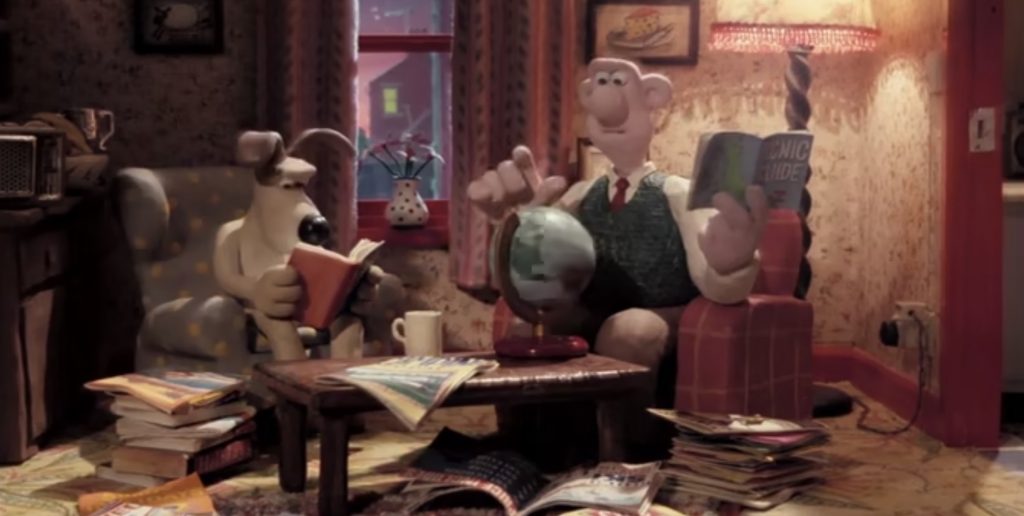
In the early 20th century, stop-motion animation began to take shape in the United Kingdom. After the establishment of Aardman Animations Limited, the technique entered a phase of maturity. In 1989, Nick Park’s Wallace & Gromit: A Grand Day Out became an instant hit upon its release. Additionally, it was nominated for Best Animated Short Film at the 63rd Academy Awards.
After joining Aardman Animations Limited, Nick Park produced many outstanding stop-motion animations, the most iconic of which is the Wallace & Gromit series. The characters Wallace and Gromit quickly gained nationwide popularity in the UK, to the extent that they were once recommended by the British tourism board as cultural icons that foreign visitors should know. This marked the full maturation of stop-motion animation production in the UK and significantly increased its international influence. The Wallace & Gromit series has since become a benchmark for study and research in the field.
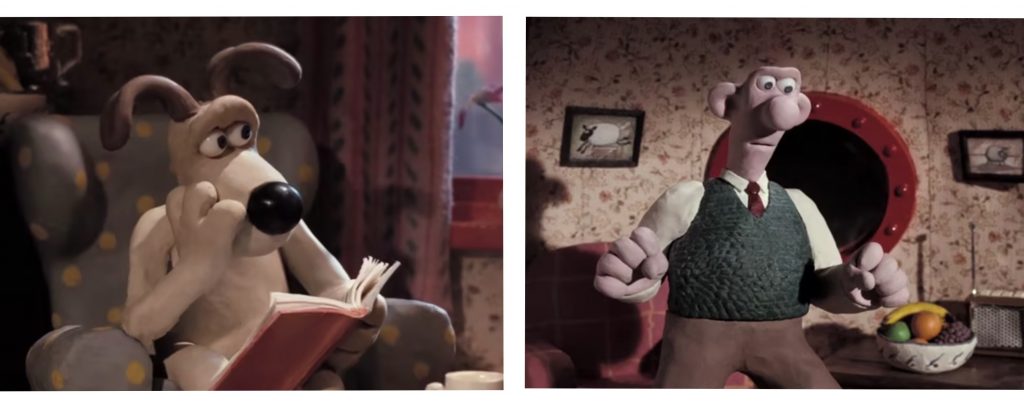
The character design in the Wallace & Gromit series is highly distinctive, exuding a quintessentially British charm. The protagonist, Wallace, often appears in the attire of a traditional British gentleman, a style imbued with national identity. This not only resonated with British audiences but also captivated viewers abroad. Furthermore, the characters in the series were meticulously crafted using clay, a process that entailed an immense amount of labor. For instance, a single character’s mouth movements could require hundreds of variations, with each model undergoing intricate procedures such as painting, coloring, and polishing. These painstaking production steps imbue the work with an unparalleled rustic and authentic aesthetic.
The series also excels in its scene construction and lighting design. In stop-motion animation, scenes are typically built using tangible materials, allowing the characters to perform within these handcrafted environments. Many artists utilize seemingly worthless objects, such as cardboard boxes and discarded wooden planks, as materials for constructing sets. This approach creates a backdrop that is both unpretentious and heartwarming. Additionally, lighting plays a pivotal role in establishing the atmosphere of a stop-motion film. For example, in Wallace & Gromit: The Curse of the Were-Rabbit, when Wallace transforms into a terrifying giant rabbit, the director employs dim lighting and filters to heighten the suspenseful atmosphere, significantly enhancing the film’s emotional impact.
From character design to scene construction and lighting, the Wallace & Gromit series demonstrates an exceptional level of artistic craftsmanship. Moreover, it is deeply rooted in national culture and societal values, making it a valuable model for study and reflection.
Leave a Reply