At the beginning of this term, I had the opportunity to visit Blinkink, an animation studio located on Camden Road in London. The visit gave me a better understanding of how a professional studio operates and inspired me to think more deeply about my future in the animation industry.
Blinkink is one of the UK’s most creative production companies, specializing in mixed-media and stop-motion animation for commercials, music videos, and short films. The studio is known for combining handcrafted aesthetics with digital techniques to create imaginative, emotionally engaging stories. Some of their well-known projects include The Bear & The Hare for John Lewis and The Supporting Act for BBC.
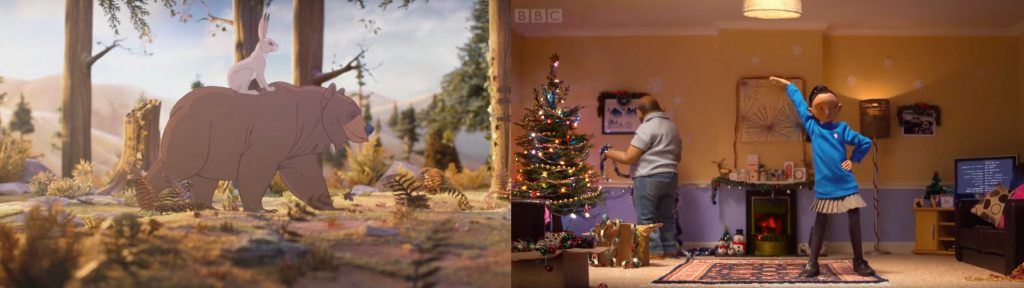
During the visit, the staff showed us many of Blinkink’s representative works, which were truly impressive. They also shared some behind-the-scenes stories about their creative process. After the presentation, we were guided around the studio and introduced to different departments, including administration, legal affairs, the recording room, and the animation workspace. Unfortunately, the stop-motion studio, which I was personally very interested in, is not located within the main building, so I couldn’t see the models and sets in person. I learned from the staff that when producing stop-motion projects, Blinkink usually rents external spaces and builds temporary sets according to the project’s needs. This flexible working method allows them to adapt efficiently to different production scales.
What impressed me most was Blinkink’s strong sense of collaboration. Each project involves a close relationship between directors, art directors, puppet makers, animators, and compositors. Their workflow showed how creativity and technical expertise merge seamlessly to bring handcrafted characters to life.
Among the many roles, I was especially drawn to the puppet maker. Puppet makers design and construct the physical characters for animation, choosing suitable materials, armature systems, and fabrics. Their work requires both artistic sensibility and technical precision, as the puppets must be expressive yet durable for animation. I found this role fascinating because it connects artistic craftsmanship with storytelling in a very direct way.
This visit also made me reflect on the difference between stop-motion industries in the UK and China. While the UK has developed a mature commercial ecosystem that supports stop-motion as both art and advertisement, studios in China remain smaller and more experimental. Still, I believe there is great potential for growth in China’s stop-motion field.
Overall, visiting Blinkink helped me understand how professional studios function and reaffirmed my passion for stop-motion animation. It reminded me that creating stop-motion films is not only about technique but also about teamwork, patience, and imagination—all essential qualities I hope to cultivate in my future career.
Leave a Reply