In Simulate Work, I worked with Year 2 students Xiao Tang, Wanyan Keung (Frances), and Kemeng Zhang (Cecilia).
During the Simulated Work project, I participated in Group 1, collaborating with second-year students. This experience was incredibly meaningful to me, as I was primarily involved in 2D character animation and clay animation color testing. Throughout this process, I developed my ability to analyze character movements and enhance my skills in clay animation production.
In the 2D character animation task, Frances assigned me two short animation sequences and provided video references. The two shots required me to depict: (1) a character being startled by a noise outside the door while drawing and (2) a character tiptoeing towards the door and cautiously opening it.

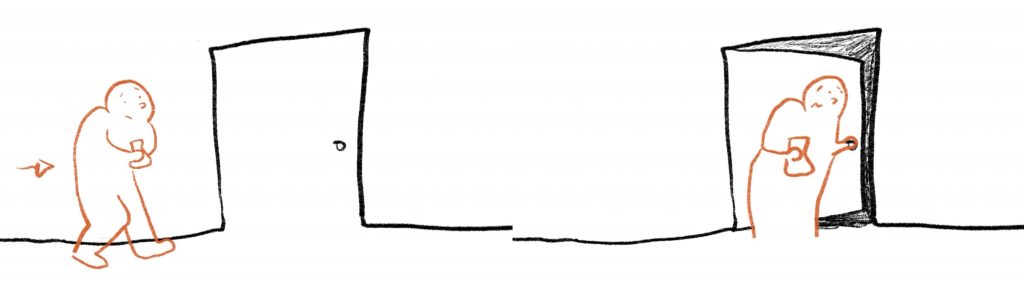
After analyzing the movement patterns in the video, I created the keyframes for the animations. Frances affirmed my work, pointing out that while there was room for improvement in timing and rhythm, the character’s movements were exactly what she envisioned. This feedback gave me confidence in my growing ability to analyze and animate motion more effectively than before.
(1) A character being startled by a noise outside the door while drawing
(2) A character tiptoeing towards the door and cautiously opening it.
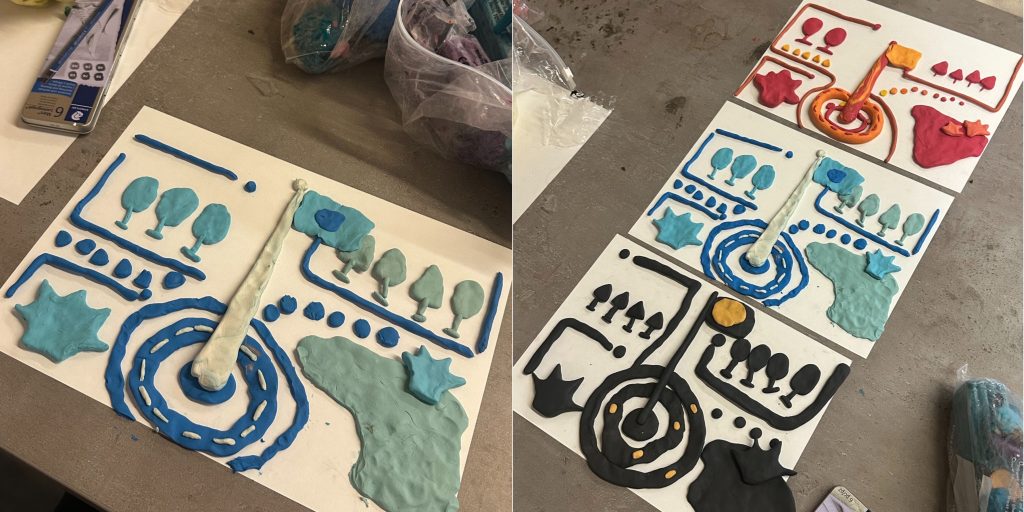
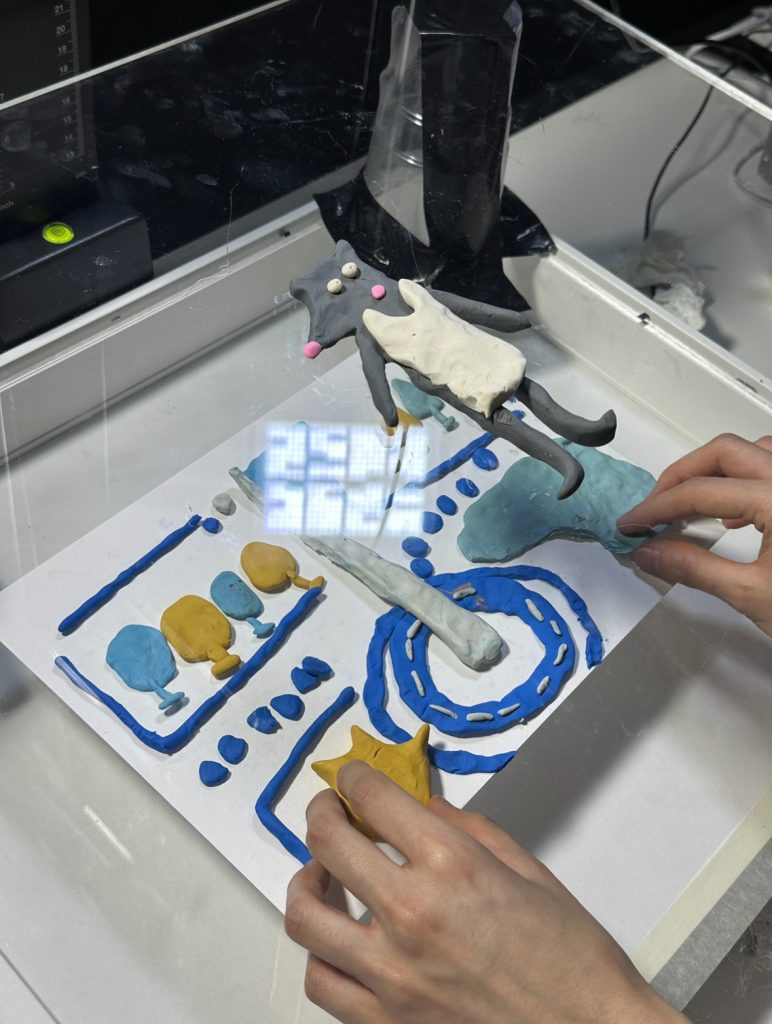
One of my favorite tasks was the color testing for clay animation. I collaborated with Frances and Ori to conduct these tests using a specific scene from the animation. We created three different background variations—black, warm-toned, and cool-toned—using clay materials. Each color scheme evoked a distinct visual effect, helping me realize the crucial role color testing plays in animation.
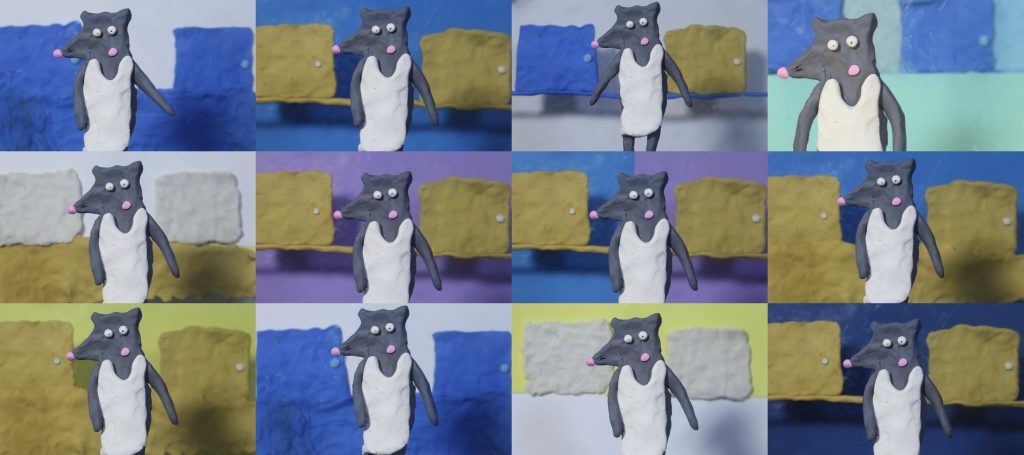
In our second round of color testing, we experimented with even more color combinations, with one shot featuring up to 12 different palettes. These extensive tests revealed a wide range of visual possibilities for the same scene, making the process both exciting and rewarding. We continuously explored novel color combinations to create a unique and visually striking effect.
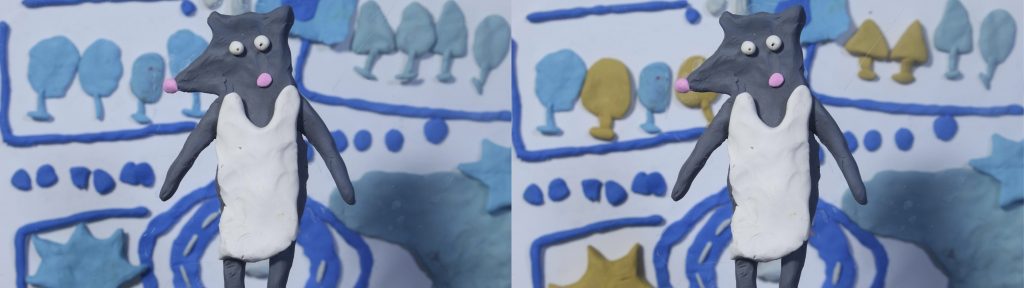
One particularly noteworthy aspect of this experience was learning about multi-layered shooting techniques in stop-motion animation from Frances. She placed the character and background on separate layers of glass panels, adjusting the camera focus to keep the character sharp while naturally blurring the background. This technique effectively conveyed the spatial relationship between the character and the background while also making the shooting process more efficient. It was my first time encountering this method, and I found it to be an ingenious way to enhance depth and improve animation workflow. I am eager to apply this technique in my future stop-motion projects.
Through this Simulated Work experience, I gained valuable insights into analyzing character movements more effectively, the significance of color testing in stop-motion animation, and the application of layered shooting techniques. Additionally, collaborating with senior students provided me with invaluable learning opportunities. I deeply cherish this enriching experience.
Leave a Reply